Last updated: 2026-07-13 (restaurant hours, dishes, and prices are subject to each venue's official announcements)
I was a little worried about bringing a vegetarian friend to Taiwan—but it turned out to be the easiest part of the trip. Plenty of people here eat vegetarian, the signs are easy to spot, and even convenience stores have options.
The first time I brought a strictly vegan friend to Taipei, I researched a pile of restaurants beforehand, worried she'd be left with nothing to eat. Once we were on the ground, I realized Taiwan is probably one of the most vegetarian-friendly places in all of East Asia. As of estimates around 2020, roughly three million people here eat vegetarian, rooted mainly in a long tradition of Buddhism and folk religion. Because of that, you'll find a “vegetarian buffet” in almost every neighborhood, and shops with a 卍 symbol or a “素食” (vegetarian) sign are easy to spot. To get the bigger picture of Taiwanese food first, pair this with ourguide to must-try Taiwanese foodfor a complete read.
That said, “vegetarian” in Taiwan isn't quite what many foreign visitors expect. The categories here follow the Ministry of Health and Welfare's packaging-label standard, splitting into five types—the differences mainly come down to whether eggs, dairy, and the “five pungent” spices are allowed. Read the table below first and you're far less likely to slip up when ordering.
How many kinds of “vegetarian” are there in Taiwan? Start with the labels
| Label | What you can eat | Closest Western equivalent |
|---|---|---|
| Quansu / pure vegetarian (vegan) | Plant-only; no eggs or dairy, and none of the five pungent vegetables | Close to vegan, but stricter (even onion and garlic are avoided) |
| Egg vegetarian (dan su) | Plants + eggs | Ovo-vegetarian |
| Dairy vegetarian (nai su) | Plants + dairy | Lacto-vegetarian |
| Lacto-ovo vegetarian (nai dan su) | Plants + eggs + dairy | What most Western vegetarians will recognize |
| Plant-based with five pungents (wu xin su) | Plant-based, may include pungent aromatics like scallion, garlic, chives, onion, and shallot | Plant-eating but fine with onion and garlic; close to plant-based |
The one most easily misunderstood is “quansu” (pure vegetarian). Taiwan's traditional pure-vegetarian diet comes from Buddhism: it avoids not only animal products but also the five pungent vegetables (scallion, garlic, chives, onion, shallot and similar aromatics). If you simply don't eat meat but don't mind onion and garlic, then “lacto-ovo” or “five-pungent vegetarian” actually fits you better. Conversely, strict vegans are usually very safe ordering “quansu” in Taiwan, since the standard is often even higher than in the West. Once you know which type you are, the next questions are where to eat and how to avoid the pitfalls.
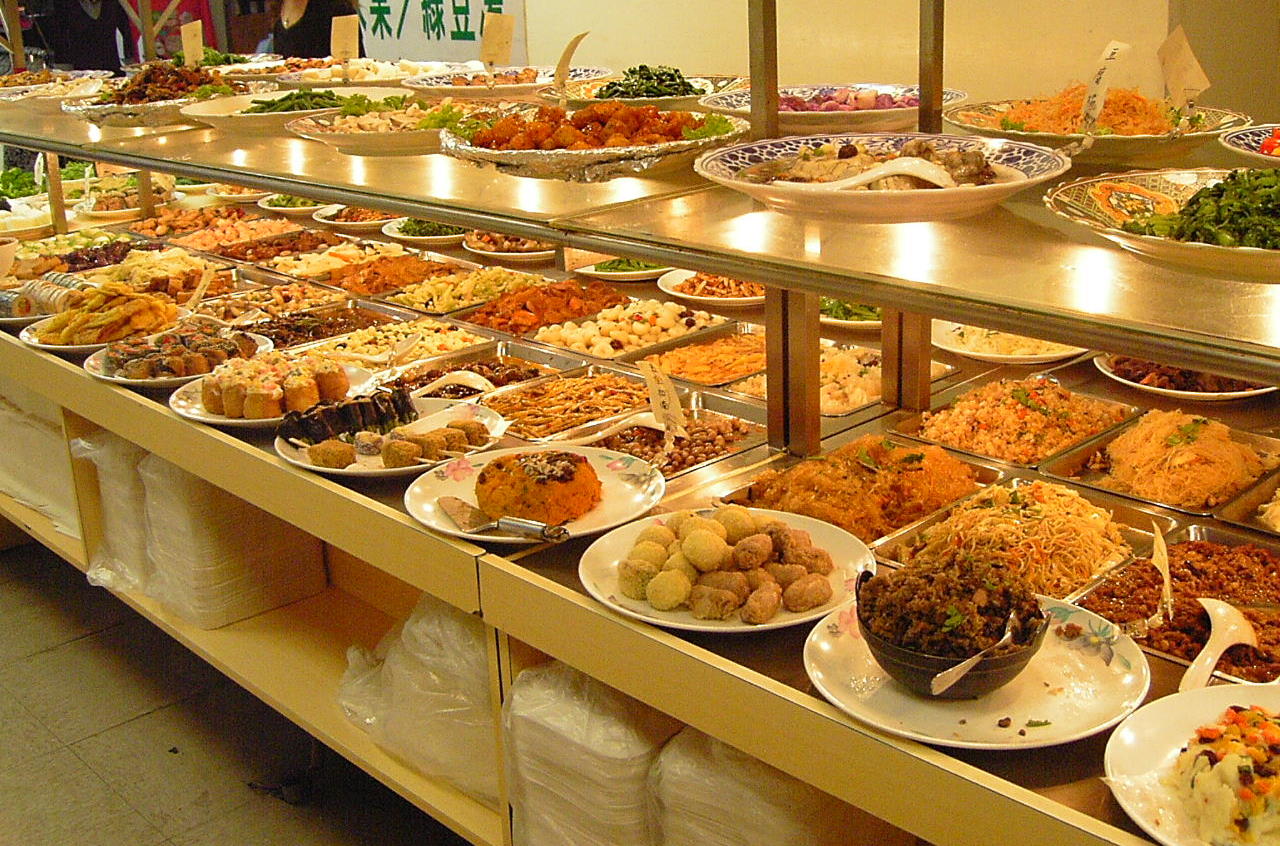
The easiest option is the “vegetarian buffet” (sometimes called a vegetarian bento or a pay-by-weight buffet): a plateful runs about NT$70–120, with everything from braised dishes and stir-fried greens to mock-meat “vegetarian cutlets.” You can see it and point at it, so you barely need to say a word. Convenience stores are the anytime backup—tea eggs, sweet potatoes, yogurt, rice balls, cold noodles, and the vegetable items in oden are mostly fine, though watch the sauces and broth bases. To get more comfortable with convenience stores, see ourguide to using Taiwan's convenience stores.Night marketsalso hides plenty of vegetarian options—vegetable pancakes, grilled corn, sweet-potato balls, tofu pudding—but this is where you need to be most careful: lard, bonito broth, dried shrimp, oyster sauce, and fish sauce often get quietly added to dishes that look perfectly vegetarian, so ask one extra question before you order.
To find places yourself, typing the English “vegetarian” into Google Maps gives limited results; switch to the Chinese “素食” and far more local spots appear. When traveling between regions, the international vegetarian map app HappyCow is also handy. These tools—plus using translation to read menus as you go—all rely heavily on mobile data, so having a connection the moment you land makes things much easier.
Holafly Taiwan eSIM
(This section contains an affiliate link; see Disclosure)
Ordering and communicating: a few handy Mandarin phrases
Vegetarian restaurants in big cities don't always have English menus, and outside Taipei you'll often have only Chinese to work with. Save the lines below on your phone, or just point to them for the staff—they'll cover most situations:
| Situation | Mandarin |
|---|---|
| Say you're vegetarian | Wo chi su (quansu / nai dan su) — “I'm vegetarian (vegan / lacto-ovo)” |
| No onion or garlic | Wo bu chi cong, suan (wu xin) — “I don't eat scallion or garlic (the five pungents)” |
| Check the ingredients | Qingwen zhege you meiyou rou, yu, dan huo gaotang? — “Does this have meat, fish, egg, or broth?” |
| Ask the shop to adjust it | Zhege keyi zuo cheng su de ma? — “Can this be made vegetarian?” |
One more small trap: many noodle soups and blanched greens are based on bonito or pork-bone broth, and the braising liquid for luwei often isn't vegetarian either—asking “Is the broth vegetarian?” is the quickest check. Vegetarian buffets and shops with a 卍 symbol or a “素食” sign are the most straightforward; when you're pressed for time and unsure, head to one of these and you can't go far wrong.
All in all, if you're lacto-ovo or flexitarian, you'll hardly ever go hungry in Taiwan; strict vegans can live perfectly well here too, though cooking for yourself or seeking out dedicated vegetarian restaurants brings extra peace of mind, and it's worth checking the map ahead when heading into smaller towns. If you're planning your route for the first time, pair this with ourfirst-time visitor's pre-trip guide to Taiwan, or head back to theTaiwan Food GuidewithTaiwan Travel Guideoverviews to fit eating and sightseeing into a single trip.
Cover photo: Taiwanese-style vegetarian buffet (Taipei). Photo: takoradee / Wikimedia Commons, CC BY-SA 3.0.
Leave a Reply