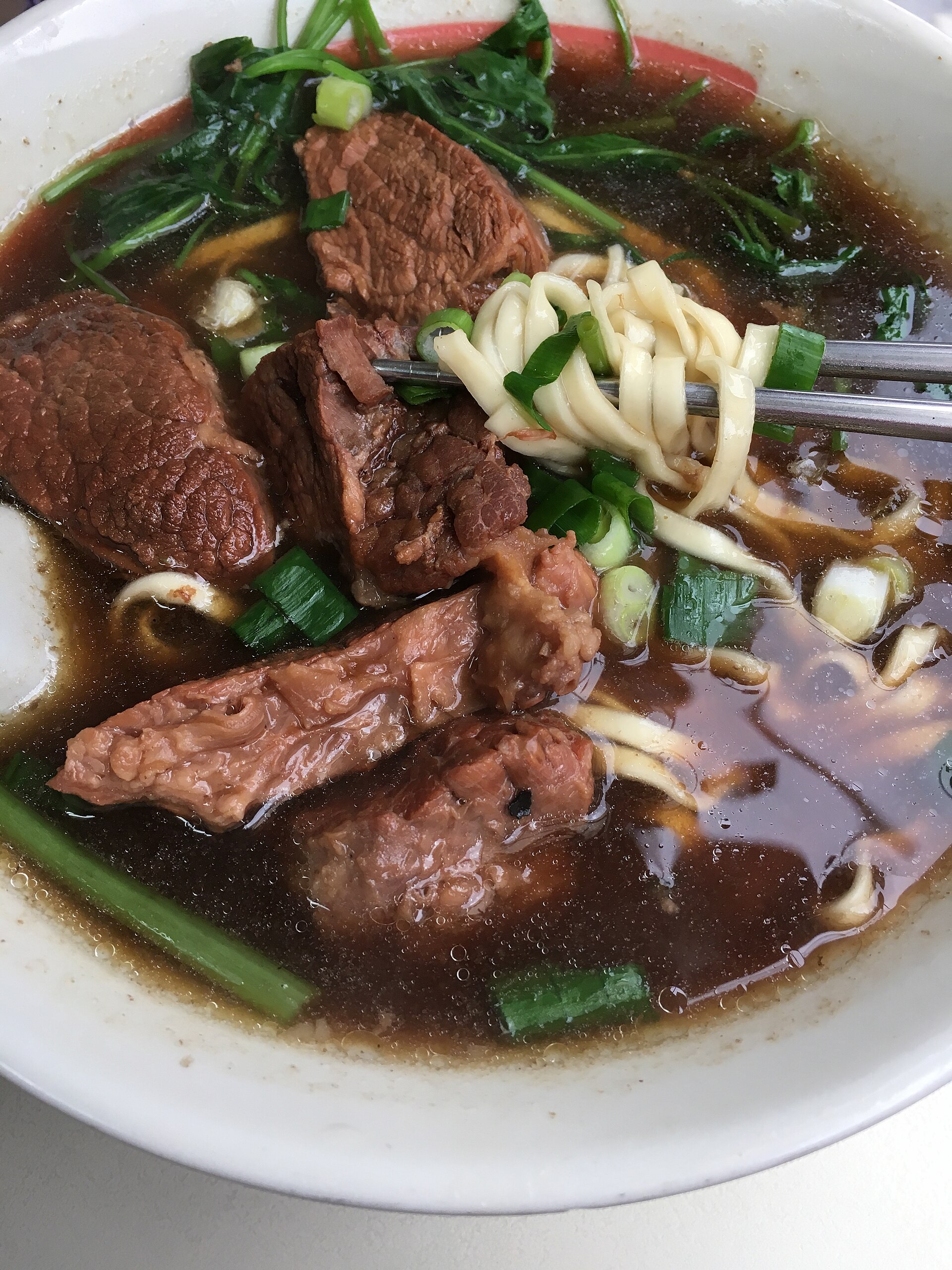
Sit down and eat: noodle shops, bento boxes, and payment tips
After exploring the night market, if you want to sit down for a proper meal, Taiwan has plenty of affordable and authentic options. Beef noodle soup is one of Taiwan's national dishes, with braised (red-cooked) and clear-broth being the two main styles; the broths differ greatly, so if you have time, both are worth trying. Noodle shops usually give you an order slip to check off the items you want and write down the quantities, then hand it to the counter—no need to speak any Chinese, which is especially friendly for travelers who don't speak the language. Braised pork rice (lu rou fan) is savory minced pork drizzled over white rice, and officials often list it as a representative Taiwanese dish. Self-service buffets (also called bento shops) let you serve your own white rice with a variety of side dishes, or specify sides to make a bento box, priced by dish or by weight—perfect for travelers who want variety on a limited budget. Beyond street food, Taiwan also has famous xiao long bao restaurants, hot pot, teppanyaki, and other sit-down options; most restaurants have menus with pictures or English, so ordering is easy. To explore the different ways to eat across these cities, pair this with ourTaiwan Food Guideto read together, and if you want to plan by city,Taipeihas the highest density of night markets, whileTainanis called by many the capital of street food.
There are a few small tips on payment and etiquette worth knowing in advance. Tipping is generally not required in Taiwan; mid-to-high-priced restaurants may add a 10% service charge, which is listed directly on the bill, so you just pay the bill amount. Night markets, street-food stalls, and drink shops usually don't charge a service fee. As for payment methods, night-market vendors mostly take cash, so it's a good idea to carry some small change, while chain stores, restaurants, and convenience stores mostly accept cards or mobile payment. The timing of payment also differs: street-food and noodle shops usually have you "pay at the counter after eating," while bento shops and drink shops have you pay when you order. On hygiene, food made and eaten fresh at night markets is freshest, and stalls with lines and quick table turnover are usually a safer bet. Vegetarians needn't worry either: Taiwan's vegetarian food culture is widespread, many shops mark dishes as "vegetarian," there are dedicated vegetarian buffets, and night markets likewise offer plenty of pure-vegetable or lacto-ovo options. After exploring the night market, if you want to plan nearby attractions or a day trip, you can check out each city's experience tickets, and remember to look at each area'sTransport Guideto plan your route.
Find Taiwan experiences and tickets on KKday
Frequently Asked Questions
Around what time do Taiwan's night markets open?
Most night markets open their stalls gradually in the early evening, with the nighttime being the liveliest period, and some stalls stay open late into the night. Operating hours vary by market and stall, and some may have regular closing days, so please check the latest official or shop announcements before you go.
Do you need to tip when eating in Taiwan?
Generally, no. Mid-to-high-priced restaurants may add a 10% service charge to the bill—just pay the bill amount. Night markets, street-food stalls, and drink shops usually don't charge a service fee and don't require any additional tip.
I don't speak Chinese—how do I order?
Many noodle shops use an order-slip system where you just check off items on the menu; chain stores and restaurants often have menus with pictures or English. At drink shops, the staff will ask about sweetness and ice, and you can complete your order by gesturing or pointing at the menu.
Can I pay by card or mobile payment at night-market stalls?
Not necessarily. Traditional stalls still mainly take cash, so it's best to carry small change; chain drink shops, restaurants, and convenience stores mostly support cards or mobile payment.
Is it easy for vegetarians to find food in Taiwan?
Relatively easy. Taiwan's vegetarian (plant-based) food culture is widespread, many shops mark dishes as "vegetarian," and there are dedicated vegetarian buffets; night markets also offer plenty of pure-vegetable or lacto-ovo options.
Leave a Reply