This page may contain affiliate links. We may earn a commission if you book through them, at no extra cost to you. Full affiliate disclosure
Updated: 2026-07-07
From walking out of the MRT station into alleys thick with the smell of sulfur, to the moment you set down your towel and step into the pool — hot spring bathing in Taiwan has its own set of rules. This guide walks you through the differences between Beitou and Jiaoxi, and the etiquette you need to know before getting in.
If this is your first time hot spring bathing in Taiwan, chances are a friend or a hotel front desk casually asked, 'Want to go soak in a hot spring?' — and only then did you realize it's more complicated than it sounds. Some places require swimwear, others won't even let you keep your underwear on; some pools are mixed-gender, others are nude bathing areas segregated by gender. For a lot of foreign visitors, just figuring out whether a given pool allows swimwear or not is enough to make you hesitate at the entrance for five minutes. That confusion is completely normal, because Taiwan's hot spring culture blends the public bathhouse habits left over from the Japanese colonial era with a second system that developed later as hotel private hot spring rooms became commercialized — and the two follow completely different rules.
The two most accessible hot spring areas in northern Taiwan areBeitou, reachable right within Taipei city, and Jiaoxi in Yilan. The two have very different styles and suit different kinds of travelers — the table below lays out the basic differences before we get into the rules in detail.
Beitou or Jiaoxi — Which Should You Choose?
| Beitou (Taipei) | Jiaoxi (Yilan) | |
|---|---|---|
| Mode of transport | MRT Tamsui-Xinyi Line, transfer to the Xinbeitou branch line, then walk from the station — suits short-stay travelers without a car | Get off at Jiaoxi Station on the TRA Yilan Line / North-Link Line — the hot spring area is a few minutes' walk from the station, no bus transfer needed |
| Spring Type | White sulfur, green sulfur, and iron sulfur springs all present; public nude pools, outdoor swimwear pools, and hotel private rooms are all available | Sodium bicarbonate spring water (the 'beauty spring'), mostly hotel communal pools and private rooms, with fewer outdoor nude bathing options |
| Swimwear Rules | Varies by venue: traditional gender-segregated public bathhouses are mostly fully nude; outdoor scenic pools and mixed communal pools usually require swimwear | The vast majority are mixed-gender communal pools requiring swimwear, or private rooms that need a separate booking (no dress requirement inside a private room) |
| Who it suits | Travelers who want to experience local public bathhouse culture, are doing a day trip, and don't mind nude bathing | Families or couples planning an overnight stay with two meals, who prefer hotel facilities and are less comfortable with nude bathing |
In short, Beitou feels more 'local,' with diverse options but also more varied rules; Jiaoxi feels more like a 'resort,' with most venues following the single, simpler swimwear-pool rule, which is less stressful for first-timers. If you're planning your overall itinerary, you can also pair it withTaiwan Must-Try Experiencesto work out the order — fitting a hot spring soak into an overnight trip or a half-day outing is easy either way.
Before You Get In: Understand the Three Types of Pools
Hot spring venues in Taiwan generally fall into three types, and knowing which is which ahead of time saves you an awkward moment at the entrance. The first is the traditional public bathhouse's nude communal pool, usually segregated by gender, where no clothing of any kind is allowed in the pool — this is the form closest to the hot spring culture left over from the Japanese colonial era, and it's what Beitou's old-established bathhouses are mainly known for. The second is the outdoor scenic pool, which may be mixed-gender and requires swimwear; prices and decor here tend to be a step up from the public bathhouses, and you'll find these in both Beitou and Jiaoxi. The third is the private hot spring room, usually charged by time slot with one room per group — whether you wear a swimsuit inside is entirely up to you. This is the best option for couples, families, or anyone who'd rather not share a pool with strangers, and it's also the least stressful choice if you're bringing children or an elderly relative with limited mobility.
If you're not sure which type you're dealing with, here's a simple rule: if there's a sign posted saying 'swimwear required,' follow it; if the entrance says no clothing of any kind is allowed, or the only thing provided is a small towel, it's a nude bathing pool — the small towel is for wiping sweat or a bit of modesty while walking around, and it's not meant to go into the water.
Hot Spring Etiquette and a Pre-Trip Checklist
Whichever type of pool you're heading to, a few rules apply almost universally, and they're also where foreign visitors most often slip up without meaning to:
- Always shower before entering the pool: this is a basic courtesy shared by both Taiwanese and Japanese hot spring culture. Showers are provided beside the pools, and you should rinse off (especially your hair and any body oils) before getting in — skipping this step is considered rude on the spot.
- No phones or cameras inside nude bathing pools: this is the biggest blind spot for travelers used to snapping photos on the go. Public nude bathing pools completely prohibit any recording device, even if you just want to capture the poolside scenery — breaking this rule usually gets you stopped by staff on the spot.
- Tattoo policies vary by venue: some traditional public bathhouses still restrict tattoos or require them to be covered with a waterproof patch, similar to common practice at hot springs in other Asian countries; private rooms usually have no such restriction. If you have visible tattoos and are worried about being turned away, it's best to go straight for a private room or ask the front desk in advance.
- How to Use Your Towel: the small towel provided at nude bathing pools shouldn't touch the water — the usual practice is to rest it on your head or set it by the pool's edge. Swimwear-required communal pools have no such restriction, and you can use your towel normally to dry off.
- Tie up or cover long hair: this is a hygiene rule, and most pools provide hair ties poolside to keep hair from dipping into the water.
- Don't get in if you're feeling unwell or after drinking alcohol: hot spring water runs hot, and some spring types are acidic or high in mineral concentration, which can cause discomfort for people with cardiovascular issues or anyone who has just been drinking — Taiwanese hot spring operators specifically call this out on their signage too.
As for what to bring, pack a swimsuit (even if you're planning on a nude pool, having one handy makes it easy to change your mind), flip-flops, a large towel, toiletries, and a waterproof pouch for your phone — once you're in a nude bathing area, your phone usually has to be locked in a locker and can't come with you. As for price, public nude pools typically run from just a few dollars up to around NT$100, while outdoor scenic pools and hotel private rooms vary widely depending on facilities and time slot. Check the venue's posted signage or website for actual prices and hours, and during peak season or before long weekends, it's worth checking ahead whether reservations are required.
如果懶得自己安排交通與比較湯屋,把礁溪安排成台北出發的一日或兩日小旅行也是常見做法,車站到溫泉區步行即達,不太需要另外租車。想省事的話也能考慮參加現成的一日遊行程:看礁溪溫泉行程()。
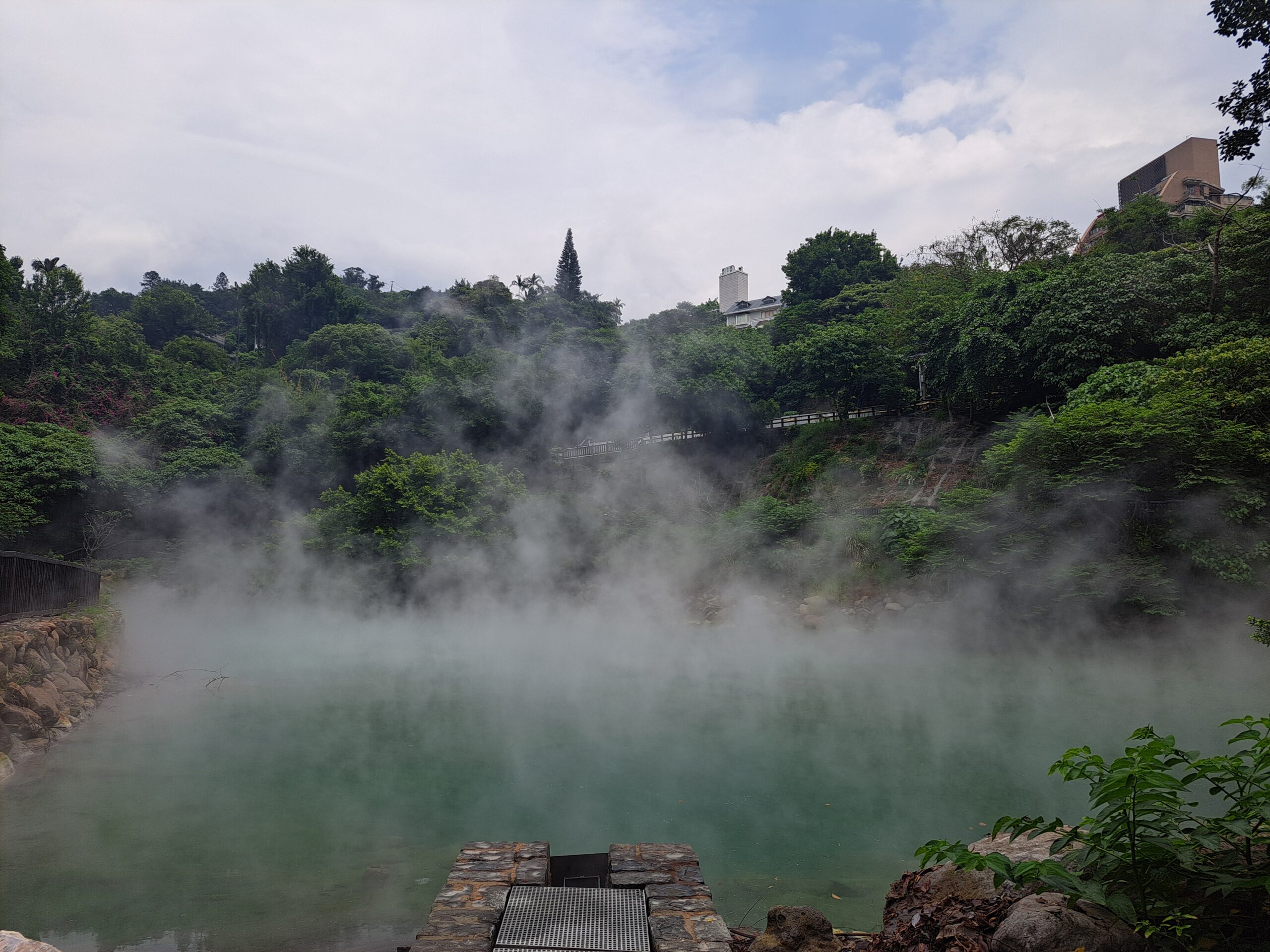
Overall, what makes Taiwan's hot springs so appealing isn't luxurious facilities — it's the atmosphere that blends Japanese-style public bathhouse tradition with a genuine sense of local life: sulfur steam drifting over the geothermal valley, hand-written signs taped to the door of an old bathhouse, the aunties in the next pool chatting away like it's nothing. Once you've got the basic rules down, all that's left is to pick a sunny or pleasantly cool afternoon and ease on in. For more Taiwan trip planning, check outTaiwan Travel Guidethe other articles in this category.
View Beitou Spring Hotel Hot Spring on KKday
View Beitou Nanfeng Tianyue Hot Spring on KKday
View Volando Wulai Hot Spring on KKday
View Gaia Hotel Beitou Hot Spring on KKday
View Beitou Risheng Shengjia Hot Spring on KKday
View Wulai Shanzhichuan Hot Spring on KKday
View Futang Rock Bath Hsinchu on KKday
View Beitou Public Pool and Private Bath on KKday
View Beitou Shanshui Hot Spring Ticket on KKday
View Jiaoxi hot spring spa and private bath tickets
View Volando Urai hot spring options
View Jiaoxi hot spring forest bath tickets
Leave a Reply