Updated: 2026-10-16 | Backfilled for 2026-09-28. Check official notices for current conditions.
With only half a day in central Hsinchu, treat the East Gate, moat and City God Temple as a flexible walking route. See the gate and waterside first, then decide whether to visit the temple or stop for food according to weather, crowds and your return time.
Hsinchu’s old center rewards a slow walk between a few places; you do not have to fit every market and monument into half a day. Starting near Hsinchu Station, check the exit, safe pedestrian crossings and the direction of the sights that day. Use East Gate as your first landmark. If you arrive from another city, consult theTaiwan High Speed Rail guideand remember that Hsinchu HSR Station and the downtown Hsinchu railway station are different stations. Allow time for the transfer. If you enjoy historic city walks, compare theTainan Confucius Temple and Chihkan Tower half-day route, but leave it for another day rather than forcing both cities into one short trip.
East Gate and the moat: find your landmark, then choose a section
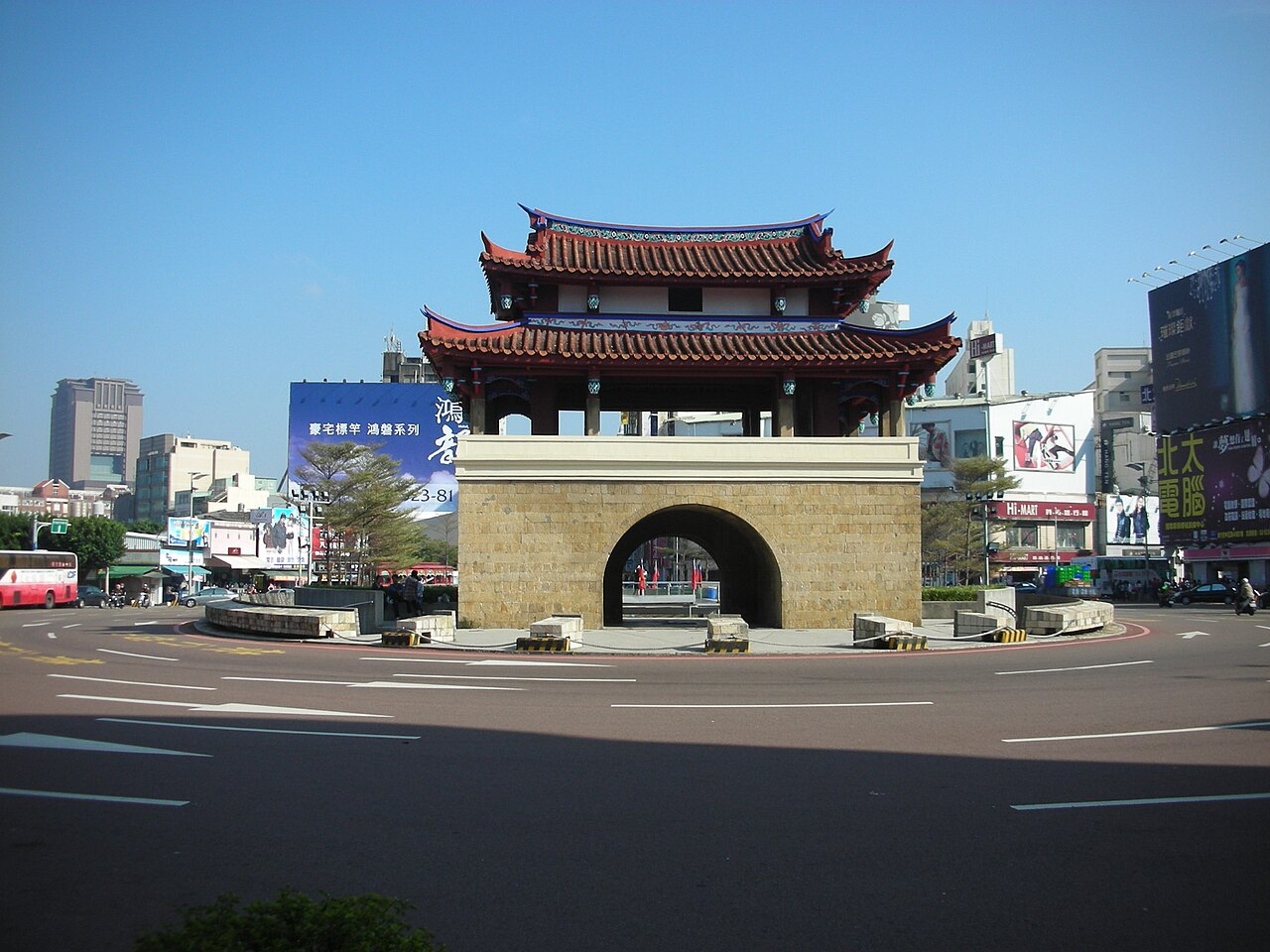
The Hsinchu City tourism website’sEast Gate attraction pageexplains that Yingxi Gate is the surviving east gate of old Zhuqian. Look for its rounded arch and the gate tower above it. Today it stands where city traffic meets a public square. Use a legal crossing before taking photos; do not step into the roundabout traffic for a frontal shot. The photo shows the gate in 2010 and helps identify its outline, but it cannot tell you today’s road layout or construction status. You need not spend long here: in strong sun or crowds, see the main facade and move on.
Next, choose a short open stretch beside the moat in the city center. There is no need to follow the whole waterway. The city’smoat attraction pagedescribes it as a recreational space linking the station-front square and the East Gate area. Follow the actual pavements, railings and construction signs. The water’s edge may be slippery; after rain, do not cross a closed section for a photograph. To rest briefly, choose an open seat and watch the street. You do not need to visit every bridge or bank. This kind of route that can be shortened also works for ahalf-day walk in Taipei Botanical Garden: when weather changes, you can turn back at any point.
| Half-day option | How to plan it | Check first |
|---|---|---|
| Shortest walk | See East Gate, then walk a short open part of the moat bank. | Pedestrian crossings and any construction that day |
| Add City God Temple | After the short route, visit the temple and allow time for worship or food. | Festival crowds, shop hours and return time |
| Shorten in rain | Choose safe streets and spend less time by the water. | Slippery surfaces and places that are open indoors |
City God Temple is an active place of worship; leave time to return
If time allows, walk towards Hsinchu City God Temple. The city’shistoric-site introduction to Hsinchu City God Templeplaces it on Zhongshan Road in the North District and explains its place in local faith and lunar-seventh-month events. You can explore the temple forecourt and nearby food stalls, but the temple is more than a photo stop. Keep passages clear and respect worshippers. Follow on-site rules around incense tables, ceremonies and photography restrictions. During festivals or busy weekends, slow down or view the architecture from outside; do not let a queue for one snack consume your return buffer.
Although the three stops are in the city center, road crossings, pauses and meals all take time. Check the directions from the station to the gate, moat and temple on a map, but a straight line on a map is not necessarily a safe pedestrian route. With older companions or a stroller, stay on walkable pavements and shorten the moat section if there are steps, closures or crowds. If you must catch a train to another city, check the route back to the station and the next departure before leaving the temple area. Do not leave the last stage to a hurried search for the platform. TheDadaocheng shophouses and waterfront routealso combines old streets and water, but its transport points and walking area differ; compare it on another day.
In rain or during event restrictions, cut the longer outdoor waterside walk rather than pushing along slippery paths. TheTaiwan rainy-day itinerary guidecan help you prepare an indoor or shorter alternative, but check whether each venue or shop is actually open that day. If you only see East Gate and a small part of the moat, you have still encountered the old city’s gate and waterside; the temple is an addition when time allows. The photograph is fromWikimedia Commons, by Foxy1219, used and resized underCC BY-SA 3.0. It does not show today’s traffic layout.
Leave a Reply